
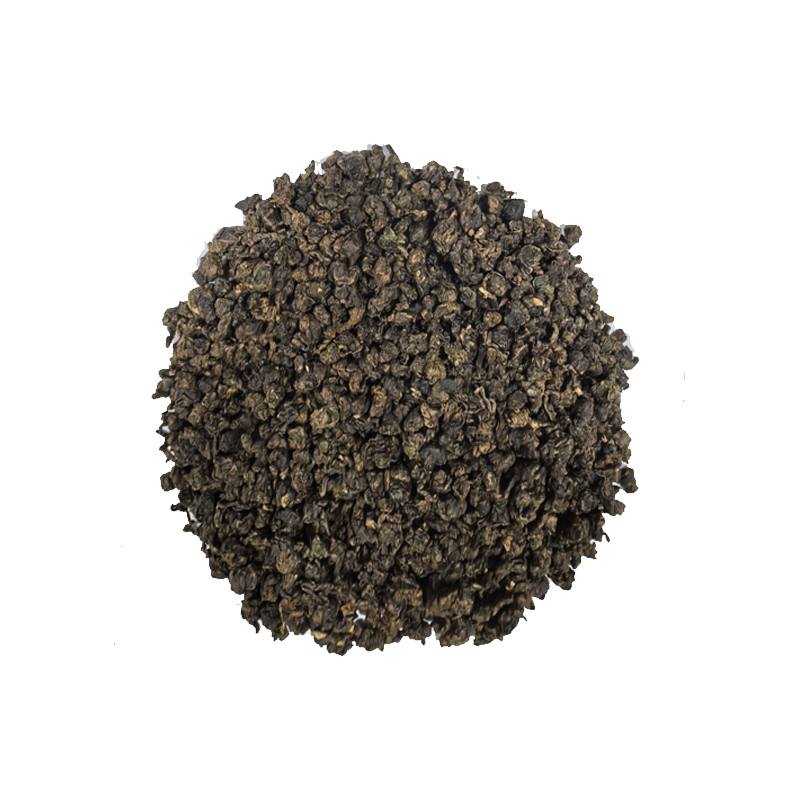
Taiwan Oolong Tea is renowned for its distinctive aroma and refined taste profile.
1. Pronounced and Multi-layered Aroma Intense Floral and Fruity Notes : Often characterized by elegant scents of orchid, osmanthus, and gardenia, with a lasting and evolving fragrance. – Roasted Undertones: Some varieties, particularly those with higher roasting levels, exhibit notes of caramel or charcoal, intertwining with floral aromas to create a complex flavor profile.
2. Origin and Varieties – Primary Growing Regions: High-altitude mountainous areas (above 1,000 meters) such as Alishan, Lishan, Shanlinxi, and Dongding Mountain. The significant diurnal temperature variation and frequent fog in these regions promote the accumulation of aromatic compounds in the tea leaves.
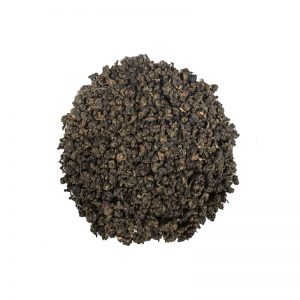
3. Processing Techniques – Light Fermentation and Roasting: Most aromatic oolong teas are semi-oxidized (20%-30% fermentation), preserving their fresh and vibrant taste. Light roasting is sometimes applied to enhance the complexity of the aroma. – Spherical Rolling : The leaves are rolled into tight, semi-ball shapes, which improves their durability during brewing and allows for a gradual release of flavors.
4. Liquor and Taste Liquid Color: Clear, honey-yellow to golden, with an amber-like translucence. Flavor Profile: A refreshing, sweet, and mellow taste with a lingering sweet aftertaste and a smooth, long-lasting finish. The tea is notably smooth and low in astringency or bitterness.
5. Brewing Recommendations Water Temperature: 85–95°C (use lower temperatures for lightly fermented teas and slightly higher for roasted varieties). Teaware: Yixing clay teapots or lidded gaiwan cups are recommended to fully unlock the tea’s aroma. Steeping Time: Brief infusions—around 30 seconds for the first few brews, gradually increasing for subsequent infusions.
Reviews
There are no reviews yet.